
Rereading Wuthering Heights: Why It's Not the Romance You Think It Is
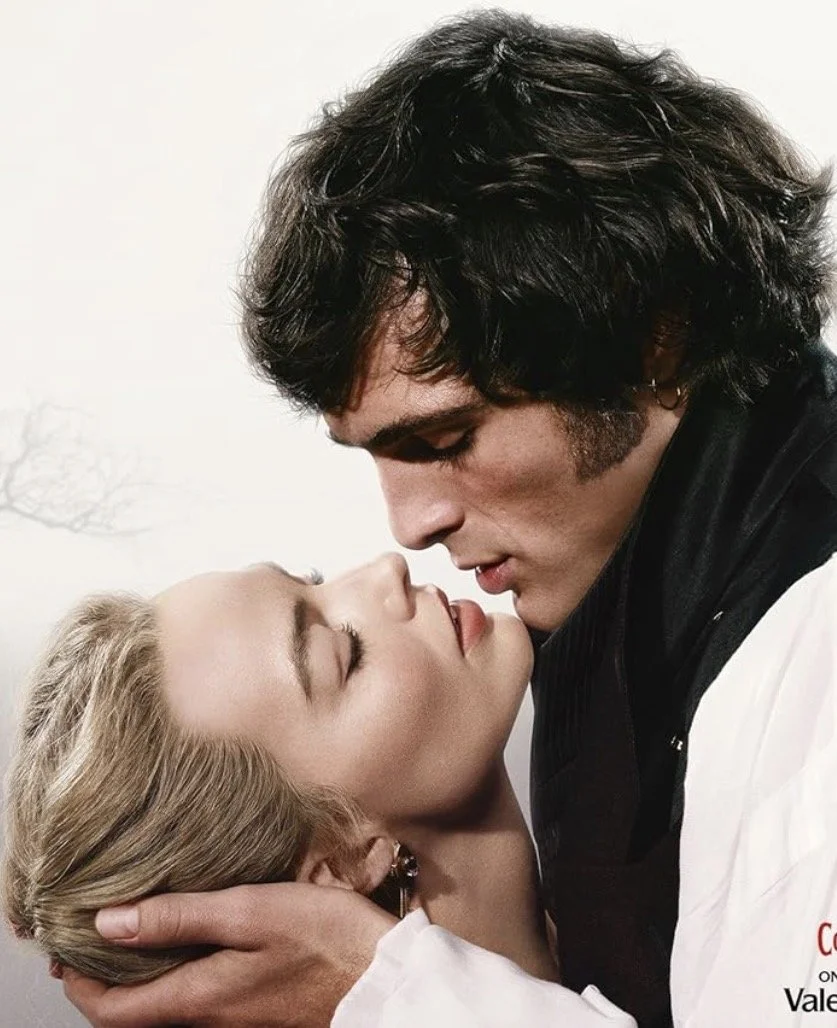
To prepare for the new film adaptation of Wuthering Heights by Emily Brontë, published in 1847, I decided to reread the novel. It’s one of my favorite books, but it was a journey to get there. I first read Wuthering Heights as a required text in my Junior year of high school. I wasn’t a good enough reader yet and kept getting confused by the two Cathys. Unable to grasp the story, I put it aside. Then the novel came up again in a college course. Thankfully, throughout my college years, I had become a better reader, so when I was reintroduced to the Gothic novel, I could finally immerse myself in it and understand it. I’ve loved it ever since and have reread it over the years. I’ll never forget my professor blowing my mind with the theory that the main characters, Catherine Earnshaw and Heathcliff, could be siblings! That’s why I never viewed this story as a romance.
I meant to watch the new movie starring Margot Robbie and Jacob Elordi, but their interviews and the subsequent reviews turned me off. First, I hadn’t caught on to the new movie having quotation marks around the title. The director and writer, Emerald Fennell, explained that the reason behind this was that the film wasn’t an exact and literal adaptation of the book; it’s too hard to adapt such dense material. I respected that because I agree. Not every book translates easily to film, but it’s also true that not every film adaptation has to be a perfect copy of the literary source material. In an article in Harper’s BAZAAR, “Emerald Fennell Made a Wuthering Heights for the ChatGPT Generation” by Chelsea Sanchez, she writes, “Brontë’s book revealed how the unjust debasement and abuse pitted against one generation can trickle down to affect the next. Without those elements, “Wuthering Heights” is nothing more than a bodice ripper—a pretty one, admittedly, but a superficial historical fantasy nonetheless.” I’m not a fan of fan fiction, and that’s what the new movie seems to be. While Wuthering Heights follows two generations—Catherine Earnshaw and Heathcliff, and Catherine Linton and Hareton Earnshaw—most film adaptations, including this new one, eschew the present-day storyline of the revenge Heathcliff exerts over the younger generation. People are only ever interested in Heathcliff and Catherine’s “romance.”
I don’t think it’s such a stretch to think that Catherine and Heathcliff could be siblings when the novel follows the relationship between the descendants of the first generation. Cathy Linton is Catherine and Edgar Linton’s daughter, while Hareton is the son of Catherine’s brother Hindley Earnshaw. Cathy and Hareton meet each other as teens and learn they’re cousins. By the end of the story, their marriage is happily expected to occur. Catherine and Heathcliff, as repeated throughout the novel, are the same person and, therefore, can’t have a successful relationship. Why did my professor theorize that Heathcliff could be related to the Earnshaws? Because no one knows his origins. Mr. Earnshaw found him as an orphan starving in Liverpool. Even if it isn’t what Brontee intended, my professor convinced me that it’s odd Earnshaw would bring this child home. So, what if Heathcliff is his illegitimate son? Rather than reading it romantically, Catherine’s iconic speech to the narrator, Nelly Dean, “It would degrade me to marry Heathcliff now; so he shall never know how I love him; and that, not because he’s handsome, Nelly, but because he’s more myself than I am. Whatever our souls are made of, his and mine are the same…” has a different meaning if you believe they could be blood.
Reading Wuthering Heights in college, we discussed how the Earnshaws and Heathcliff, who lived at Wuthering Heights, were all savage with dark hair and eyes, while the Lintons, who live in the other primary setting of the novel, Thrushcross Grange, are described as having light features and are refined. In this way, I didn’t catch on to any probability that Heathcliff could be black and that his race made him “other.” There’s no explicit statement in the book to confirm whether Heathcliff is black or not; Catherine chooses to marry Edgar Linton over Heathcliff because of class. In this recent rereading, I did pay more attention to how characters in the novel call Heathcliff. Some words I picked out were devil, villain, bad-natured, wicked, misanthropist, ghoul, vampire, and dark face. The use of “dark face” is the only time I could tell the color of his skin might have been referenced. It was only in rereading Wuthering Heights this year and researching the novel that I learned there are some who have the opinion that Heathcliff is black because of where he was found. At the time, Liverpool was a main slave-trading port of England, which is really interesting. Heathcliff is also described as “Lascar,” at the time meaning Indian or Southeast Asian sailor. When Mr. Earnshaw brings him to Wuthering Heights to be raised with his two other children, everyone in the dwelling certainly treats him as “other,” as they verbally and physically abuse him. It’s disappointing that none of these elements were explored in the new film and introduced to a new generation.
Wuthering Heights has stood the test of time not because of any romance but for its darkness and complex characters. Characters like Catherine Earnshaw will infuriate you with her actions that go against her desires. You’ll want to scream, “You can’t have your cake and eat it too,” at her. This book is unique in that you’re not really rooting for anyone to win except for maybe Hareton to finally discover how Heathcliff has swindled him out of his inheritance. Heathcliff and Catherine’s pure possessiveness of each other is toxic, and as a fellow Scorpio, I’m here for it; however, if there’s any loving relationship in the novel to admire, it’s the second generation between cousins Cathy and Hareton. Cathy teaches Hareton to read, and he, in turn, teaches her not to judge a book by its cover. Rereading the novel, I empathized a lot more with the second generation as they’re innocent victims of the first generation’s actions. Under Heathcliff’s thumb, they have no control over their lives. Death is a theme in the novel that directs the narrative in a new way. Mr. Earnshaw’s death leads to Heathcliff’s relegation to servant status; Catherine’s death haunts Heathcliff; Edgar Linton’s death leads to the second Cathy’s move to Wuthering Heights. It isn’t until Heathcliff’s death that the cycle of violence is finally broken and Hareton and Cathy’s relationship can blossom. It’s a shame film adaptations don’t capture that story as well.

Maria Molina is a writer of Puerto Rican and Ecuadorian descent living in Pennsylvania with her husband, Albert, and their son, Sebastian. She writes essays on pop culture, personal growth, and parenting a child with autism. Maria is the author of the novella All Souls’ Day and the short novel Bendito. She was featured in Autism Parenting Magazine.