
How Growing Up Around Books Shaped Me as a Writer
Lately, I’ve been obsessed with watching author interviews and book events on YouTube. I had only ever focused on learning how to write a novel and worked hard on that, reading books on craft and practicing writing, but I never knew what the life of an author looked like. I got a small taste of it with my first book signing a few months ago. Around Thanksgiving, I found a podcast called Friends & Fiction hosted by four New York Times bestselling authors. They provide weekly author interviews about their new book releases. It’s become my new favorite podcast because I get to “meet” so many authors. As someone who self-publishes and is outside the industry, this show provides me a way to learn more about publishing, writing, and what it means to live your life as an author. Also, hundreds of thousands of books come out each year. There’s no way to read or even know about every single title. With shows like Friends & Fiction and other YouTube platforms like Barnes & Noble’s podcast Poured Over, and Politics and Prose, I get to learn about more books and writers. One of my favorite questions the hosts of Friends & Fiction ask authors is, “What were the values around reading and writing when you were growing up, and do you think they had anything to do with you becoming a writer?” Growing up, the values surrounding reading and writing played a huge role in my becoming a writer.
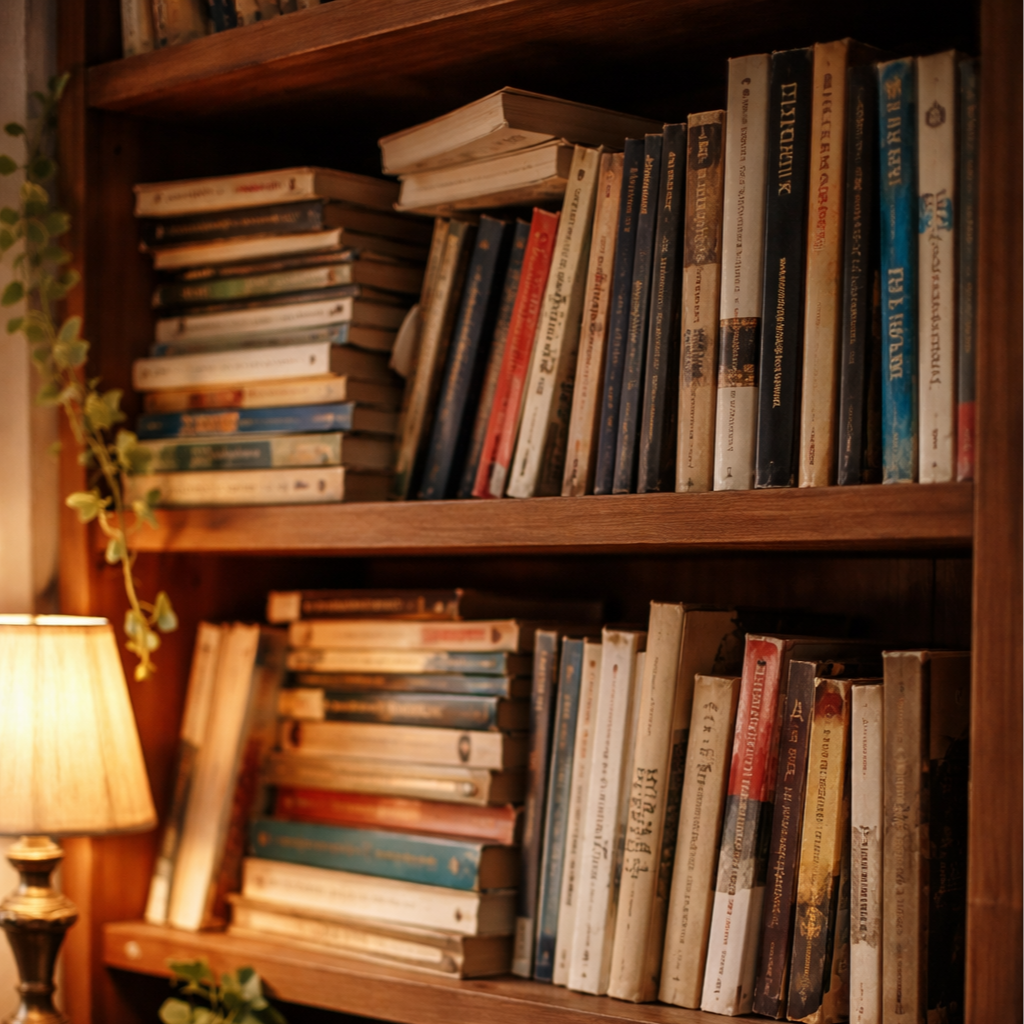
In The House on Spruce Street, I wrote about my childhood home and my parents shaping my love for the arts. We always had bookshelves stuffed with books in the living room, the hallway, my parents’ bedroom, and mine. I loved that at any given time I could pull a book down and get lost in words, even if I’d read it a million times before. We had a gigantic textbook with gorgeous pictures and descriptions of all these countries around the world that I was obsessed with poring over; Dr. Seuss dominated the shelves as well. I remember my Kindergarten teacher reading Chicka Chicka Boom Boom to the class and being swept away by the rhythm and the beautiful colors of the illustrations. By the first grade, I was reading books on my own. Now looking back, I realize that when I had my head inside a chapter book, that was the only time I wasn’t looking around to see what my peers were doing, which would then inform what I should do. It was magic. The first book to take hold of me like Matilda was Amelia Bedelia. I read that series in the third grade, and I’d crack up at Amelia, the housemaid, mixing up words with their literal meaning. My favorite faux pas? When Amelia is charged with following a recipe to bake a cake. The ingredients called for dates, so she cuts up actual dates from the calendar and puts them right in the cake batter. Hilarious.
“Now looking back, I realize that when I had my head inside a chapter book, that was the only time I wasn’t looking around to see what my peers were doing, which would then inform what I should do. It was magic.”
The best thing my dad did for my younger sisters and me was modeling reading at home. I always saw him sitting in an armchair, reading a book. He read a lot of non-fiction, mostly self-help and books on finance. He took my sister and me to the Reading Public Library all the time. When I could write my name, he took me to the front desk to get my own library card. I still use it, and it’s one of my favorite memories next to being old enough to hang out in the cool teen section on the second floor of the library. My mom wasn’t a reader, but with her, I enjoyed watching novelas and gleaned knowledge about drama and character arcs that would help shape my future storytelling. But what I really fell in love with were novels; I loved fiction. After Amelia Bedelia, I got into the Baby-Sitters Little Sister series, which led me to The Baby-Sitters Club, Sweet Valley High, and Harry Potter. Before college, I never read anything that was non-fiction. I was averse to reading about anything in the real world that could teach me something. Instead of reading Judy Blume, I ate up Daughters of the Moon. To persuade me to go on errands with him, my dad would promise me a trip to our local bookstore, Borders, afterwards. That always got me.
One of my favorite topics that comes up in author interviews is genre. I hate the constrictions of genre in a novel. I don’t read genre fiction too much and I don’t write it. When I went into my local bookstore to speak to the owner about selling my books, she asked me the dreaded question of what genre they were. To me, there are just two: non-fiction and fiction. I’ll accept breaking it down further to children’s and adult, but that’s it, and even that distinction can get blurry. And as to what is strictly YA (young adult)? Who knows. I think it hurts a book to label it with a genre. I never used to read Stephen King because all I ever heard was that it was horror. Because I was a scaredy cat, I steered clear of him. It wasn’t until I was an adult in my twenties that I gave his books a chance and read Carrie first, his debut novel. It was a great surprise to me to find out that everything about that story is exactly what I’m into. As a result, I’ve read many more of his books now and consider him not just one of my favorite authors, but one of the greatest writers of all time. While there are stories I lean into more like Gothic, coming-of-age, supernatural, and fantastical, I really love classic literature. I’m so interested in stories that stand the test of time. I like reading and writing stories that combine different elements and don’t box themselves into strictly one genre.
My parents valued education and the arts and never censored what we consumed. It’s common to hear stories from children of immigrants whose parents didn’t support their creative dreams and wanted them to do something more practical, like become a lawyer or doctor. That was never my experience. My parents supported and encouraged my writing dreams; they didn’t bat an eye at me majoring in English. They saw how much I loved reading, and my aptitude for the language—English was always my best subject in school. They never thought it was impractical for me to make writing my profession. It made complete sense to them that I wanted to be an author. If I didn’t have that blind belief start at home, I would’ve never pursued writing. I wouldn’t have fallen in love with stories if I hadn’t been surrounded with it in my childhood. Without that exposure and freedom to find what I liked, I wouldn’t be the writer I am today.
Enjoyed this post? Subscribe below to get the next one straight to your inbox ✉️